Sat, Feb 21, 2026
[Archive]
Volume 17, Issue 2 (June-2025 2025)
Iranian Journal of Blood and Cancer 2025, 17(2): 34-45 |
Back to browse issues page



Download citation:
BibTeX | RIS | EndNote | Medlars | ProCite | Reference Manager | RefWorks
Send citation to:


BibTeX | RIS | EndNote | Medlars | ProCite | Reference Manager | RefWorks
Send citation to:
Porkar P, Mehrabipour F, Pourasad M H, Movassagh A A, nazari K, Porkar P, et al . Enhancing Cancer Zone Diagnosis in MRI Images: A Novel SOM Neural Network Approach with Block Processing in the Presence of Noise. Iranian Journal of Blood and Cancer 2025; 17 (2) :34-45
URL: http://ijbc.ir/article-1-1706-en.html
URL: http://ijbc.ir/article-1-1706-en.html
Payam Porkar1 
 , Faranak Mehrabipour2 , Mohammad Hossein Pourasad3 , Ali Akbar Movassagh4 , Kobra Nazari5 , Pasha Porkar6 , Mustafa Ghaderzadeh *7 , Mehdi Gheisari8 , Cirruse Salehnasab9 , Sohrab Almasi10
, Faranak Mehrabipour2 , Mohammad Hossein Pourasad3 , Ali Akbar Movassagh4 , Kobra Nazari5 , Pasha Porkar6 , Mustafa Ghaderzadeh *7 , Mehdi Gheisari8 , Cirruse Salehnasab9 , Sohrab Almasi10
1- Institute of Artificial Intelligence, Shaoxing University, Zhejiang, China.
2- Computer Department, Islamic Azad University, Damavand Branch, Damavand, Iran.
3- School of paramedical, Kermanshah University of Medical Sciences, Kermanshah, Iran.
4- Department of Medical Physics and Biomedical Engineering, School of Medicine, Tehran University of Medical Sciences, Tehran, Iran
5- Department of mathematics, Vali-E-Asr university of Rafsanjani, Rafsanjani, Iran.
6- Department of Mathematics and Computer Science, Eindhoven University of Technology, Eindhoven 5600 MB, Netherlands.
7- Boukan Faculty of Medical Sciences, Urmia University of Medical Sciences, Urmia, Iran. ,Mustaf.ghaderzadeh@sbmu.ac.ir
8- Institute of Artificial Intelligence, Shaoxing University, Zhejiang, China. & Department of R&D, Shenzhen BKD Co LTD, Shenzhen, China.
9- Assistant Professor of Medical Informatics, Social Determinants of Health Research Center, Yasuj University of Medical Sciences, Yasuj, Iran.
10- National Center for Health Insurance Research, Tehran, Iran.
2- Computer Department, Islamic Azad University, Damavand Branch, Damavand, Iran.
3- School of paramedical, Kermanshah University of Medical Sciences, Kermanshah, Iran.
4- Department of Medical Physics and Biomedical Engineering, School of Medicine, Tehran University of Medical Sciences, Tehran, Iran
5- Department of mathematics, Vali-E-Asr university of Rafsanjani, Rafsanjani, Iran.
6- Department of Mathematics and Computer Science, Eindhoven University of Technology, Eindhoven 5600 MB, Netherlands.
7- Boukan Faculty of Medical Sciences, Urmia University of Medical Sciences, Urmia, Iran. ,
8- Institute of Artificial Intelligence, Shaoxing University, Zhejiang, China. & Department of R&D, Shenzhen BKD Co LTD, Shenzhen, China.
9- Assistant Professor of Medical Informatics, Social Determinants of Health Research Center, Yasuj University of Medical Sciences, Yasuj, Iran.
10- National Center for Health Insurance Research, Tehran, Iran.
Abstract: (1446 Views)
Background: Brain tumors are a specific disease that directly affects the brain. Magnetic Resonance Imaging (MRI) is considered the most effective imaging technique for diagnosing brain tumors, providing crucial information about tumor size, location, and type. However, accurately segmenting and extracting the tumor region from MRI images is a challenging task for radiologists and physicians, impacting the overall accuracy of diagnosis.
Methods: This research focuses on addressing the challenges of brain tumor detection and segmentation in MRI images. In line with the recent trend of big data analysis, neuroimaging data, including MRI images, are considered an important subset of big data due to their volume, velocity, and variety. The proposed approach utilizes the Self Organizing Maps (SOM) Neural Network, a powerful concept in image processing, to handle noise and artifacts in brain MRI.
Results: The proposed method employs image segmentation to focus on smaller parts of the brain and utilizes the SOM neural network for noise reduction, enhancing the processing of noisy brain images. The approach incorporates block processing to effectively approximate the suspected cancer zone, facilitating accurate medical diagnosis. The algorithm achieves precise specification of brain image zones by learning the unique SOM algorithm and setting an edge detection threshold. Experimental results demonstrate the superior performance of the proposed method, surpassing previous approaches, with a precision of over 10% in diagnosing abnormal brain areas.
Conclusion: The study highlights the importance of MRI in brain tumor diagnosis and the challenges associated with accurate tumor segmentation. The proposed approach using the SOM Neural Network effectively addresses these challenges by reducing noise, enabling block processing, and enhancing the precision of tumor detection. Results indicate the potential of the proposed method to significantly improve brain tumor diagnosis and contribute to advancements in medical imaging for neuroimaging applications.
Methods: This research focuses on addressing the challenges of brain tumor detection and segmentation in MRI images. In line with the recent trend of big data analysis, neuroimaging data, including MRI images, are considered an important subset of big data due to their volume, velocity, and variety. The proposed approach utilizes the Self Organizing Maps (SOM) Neural Network, a powerful concept in image processing, to handle noise and artifacts in brain MRI.
Results: The proposed method employs image segmentation to focus on smaller parts of the brain and utilizes the SOM neural network for noise reduction, enhancing the processing of noisy brain images. The approach incorporates block processing to effectively approximate the suspected cancer zone, facilitating accurate medical diagnosis. The algorithm achieves precise specification of brain image zones by learning the unique SOM algorithm and setting an edge detection threshold. Experimental results demonstrate the superior performance of the proposed method, surpassing previous approaches, with a precision of over 10% in diagnosing abnormal brain areas.
Conclusion: The study highlights the importance of MRI in brain tumor diagnosis and the challenges associated with accurate tumor segmentation. The proposed approach using the SOM Neural Network effectively addresses these challenges by reducing noise, enabling block processing, and enhancing the precision of tumor detection. Results indicate the potential of the proposed method to significantly improve brain tumor diagnosis and contribute to advancements in medical imaging for neuroimaging applications.
Keywords: Brain Tomur, Magnetic Resonance Imaging, Edge detection, Image processing, Segmentation, Self-Organizing Maps, Neural network
: Original Article |
Subject:
AI in Medicine
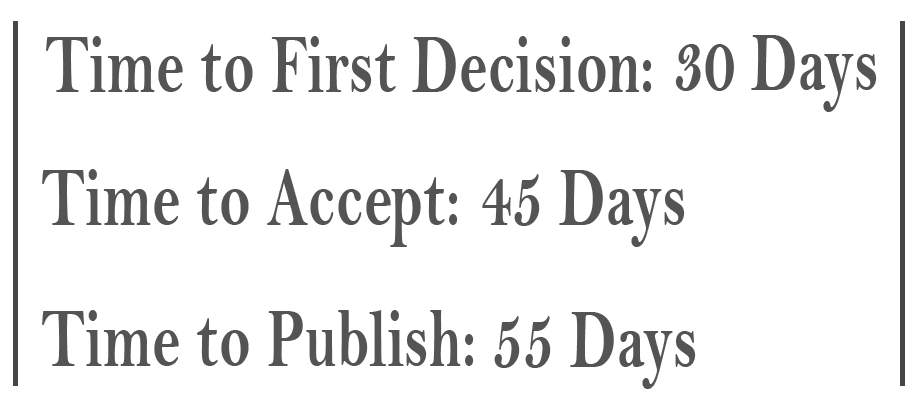
Received: 2025/04/22 | Accepted: 2025/06/14 | Published: 2025/06/30
Received: 2025/04/22 | Accepted: 2025/06/14 | Published: 2025/06/30
References
1. Mei P. A, de Carvalho Carneiro C, Fraser S. J, Min L. L, & Reis F, "Analysis of neoplastic lesions in magnetic resonance imaging using self-organizing maps," Journal of the Neurological Sciences, vol.359, no. 1, pp.78-83,2015. [DOI:10.1016/j.jns.2015.10.032]
2. Yongsheng Rao, Saeed Kosari, et al, "New Results in Vague Incidence Graphs with Application", Journal of Function Spaces, vol. 2022, Article ID 3475536, 7 pages, 2022 [DOI:10.1155/2022/3475536]
3. K. B. S. M. C. Lohrenz, "A Survey of Digital Image Segmentation Algorithms," Noarl Report, 1992.
4. ayelet Akselrod -ballin, "A Region Based Convolutional network for Tumor Detection and Classification in Breast Mammography," International Workshop on Large-Scale Annotation of Biomedical Data and Expert Label Synthesis ,2016. [DOI:10.1007/978-3-319-46976-8_21]
5. S. M. Ujjwal Maulik, "Medical Image Segmentation Using Genetic Algorithms," IEEE transactions on information technology in biomedicine, vol.13, no.2, pp.166-73, 2009. [DOI:10.1109/TITB.2008.2007301]
6. Menze B. H, et al, "The multimodal brain tumor image segmentation benchmark (BRATS)," IEEE transactions on medical imaging, vol.34, no.10, pp.1993-2024, 2015.
7. Rohini J. P, Senthil C. S, and Manikandan M, "Brain tumor MRI image segmentation and detection in image processing," International Journal of Research in Engineering and Technology, vol.3, no.1,pp.1-5, 2014. [DOI:10.15623/ijret.2014.0313001]
8. de Brébisson, Alexandre, and Giovanni Montana, "Deep neural networks for anatomical brain segmentation," arXiv preprint arXiv:1502.02445, 2015. [DOI:10.1109/CVPRW.2015.7301312]
9. Moeskops P, et al, "Automatic segmentation of MR brain images with a convolutional neural network," IEEE transactions on medical imaging, vol.35, no.5,pp.1252-1261, 2016. [DOI:10.1109/TMI.2016.2548501]
10. Patil, Dinesh D, and Sonal G Deore, "Medical image segmentation: a review," International journal of computer science and mobile computing , vol.2, no.1, pp.22-27,2013.
11. Balafar M. A, "Fuzzy C-mean based brain MRI segmentation algorithms," Artificial Intelligence Review ,vol.41, no.3, pp.441-449, 2014. [DOI:10.1007/s10462-012-9318-2]
12. Sharma, Yogita, and Parminder Kaur, "Detection and extraction of brain tumor from MRI images using k-Means clustering and watershed algorithms," International Journal of Computer Science Trends and Technology ,vol.3, no.2 ,pp.32-8, 2015.
13. He Bing Song, Feng Zhu, and Yong Gang Shi, "Medical Image Segmentation," Advanced Materials Research, vol. 760, 2013. [DOI:10.4028/www.scientific.net/AMR.760-762.1590]
14. Wallis, Matthew G, et al, "Two-view and single-view tomosynthesis versus full-field digital mammography: high-resolution X-ray imaging observer study," Radiology , vol.262, no.3, pp.788-796,2012. [DOI:10.1148/radiol.11103514]
15. Subhashdas, Shibudas Kattakkalil, et al, "visual image enhancement based on particle swarm optimization with Gaussian mixture," SPIE/IS&T Electronic Imaging. International Society for Optics and Photonics, 2015.
16. Arnay, Rafael, Francisco Fumero, and Jose Sigut, "Ant Colony Optimization-based method for optic cup segmentation in retinal images," Applied Soft Computing , vol.52, 2016. [DOI:10.1016/j.asoc.2016.10.026]
17. Ishak, Anis Ben, "A two-dimensional multilevel thresholding method for image segmentation," Applied Soft Computing , vol.52, pp.306-322, 2017. [DOI:10.1016/j.asoc.2016.10.034]
18. Nabizadeh N, and Kubat M, "Brain tumors detection and segmentation in MR images: Gabor wavelet vs. statistical features," Computers & Electrical Engineering, vol.45, pp.286-301, 2015. [DOI:10.1016/j.compeleceng.2015.02.007]
19. Reza Fakouri, Payam Porkar, Mahmood Fathy "Region-based Image GA Clustering and Retrieval with Relevance Feedback," International Conference Image and Vision Computing, 2008 International Conference on Computer and Electrical Engineering, pp.383-387, 2008. [DOI:10.1109/ICCEE.2008.57]
20. M Ghayoumi, et al, "Correlation Error Reduction of Image in Stereo Vision with Fuzzy Method and its Application on Cartesian Robot," Advanced In Artificial Intelligence, Elsevier, 2006. [DOI:10.5772/5008]
21. Payam Porkar , et al, "Recognition of Irregular Patterns Using Statistical Methods Based on Hidden Markov Model," the second international conference on information & technology ,may,2005.
22. Rezaeiye, Payam Porkar, et al, "Statistical method used for doing better corneal junction operation," Advanced Materials Research. vol. 548, 2012. [DOI:10.4028/www.scientific.net/AMR.548.762]
23. Gheisari M, et al, "A survey to face recognition algorithms: advantageous and disadvantageous," Journal Modern Technology & Engineering, vol.2, no.1, pp.57-65, 2017.
24. Jayaraman Sethuraman, et al "Eccentric Methodology with Optimization to Unearth Hidden Facts of Search Engine Result Pages," Recent Patents on Computer Science , 2018. [DOI:10.2174/2213275911666181115093050]
25. Alzubi J.A, et al, "Improve Heteroscedastic Discriminant Analysis by Using CBP Algorithm," Algorithms and Architectures for Parallel Processing. ICA3PP 2018. Lecture Notes in Computer Science, vol.11335, Springer, 2018. [DOI:10.1007/978-3-030-05054-2_10]
26. Yinglong Dai and Guojun Wang, "Analyzing Tongue Images Using a Conceptual Alignment Deep Autoencoder," IEEE ACCESS, vol.6, pp.5962-5972, 2018. [DOI:10.1109/ACCESS.2017.2788849]
27. Ashourian, Mohsen, et al, "An Improved Node Scheduling Scheme for Resilient Packet Ring Network," Majlesi Journal of Electrical Engineering vol.9, no.2,pp. 43,2015.
28. Feng Wang, Wenjun Jiang, Xiaolin Li, and Guojun Wang,"Maximizing Positive Influence Spread in Online Social Networks via Fluid Dynamics," Future Generation Computer Systems, vol.86, pp.1491-1502, 2018. [DOI:10.1016/j.future.2017.05.050]
29. Noor, F, et al "Bayesian estimation and prediction for Burr‐Rayleigh mixture model using censored data," Int J Commun Syst. 2019;e4094. [DOI:10.1002/dac.4094]
30. Bhattacharya, et al (2021). Deep learning and medical image processing for coronavirus (COVID-19) pandemic: A survey. Sustainable cities and society, 65, 102589. [DOI:10.1016/j.scs.2020.102589]
31. Reddy, G. T., et al (2020). Analysis of dimensionality reduction techniques on big data. IEEE Access, 8, 54776-54788. [DOI:10.1109/ACCESS.2020.2980942]
32. Masud, M.;et al A Machine Learning Approach to Diagnosing Lung and Colon Cancer Using a Deep Learning-Based Classification Framework. Sensors 2021, 21, 748. [DOI:10.3390/s21030748]
33. Masud, M. et al, Convolutional neural network-based models for diagnosis of breast cancer. Neural Comput & Applic (2020). [DOI:10.1007/s00521-020-05394-5]
Send email to the article author
| Rights and permissions | |
 |
This work is licensed under a Creative Commons Attribution-NonCommercial 4.0 International License. |

- Iranian Journal of Blood and Cancer
- Journal Tel: +989369936116
- Publisher Tel: +982122275917
- Mail: Info@ijbc.ir